Why Do Programmers Need Private Offices with Doors? Do Not Disturb
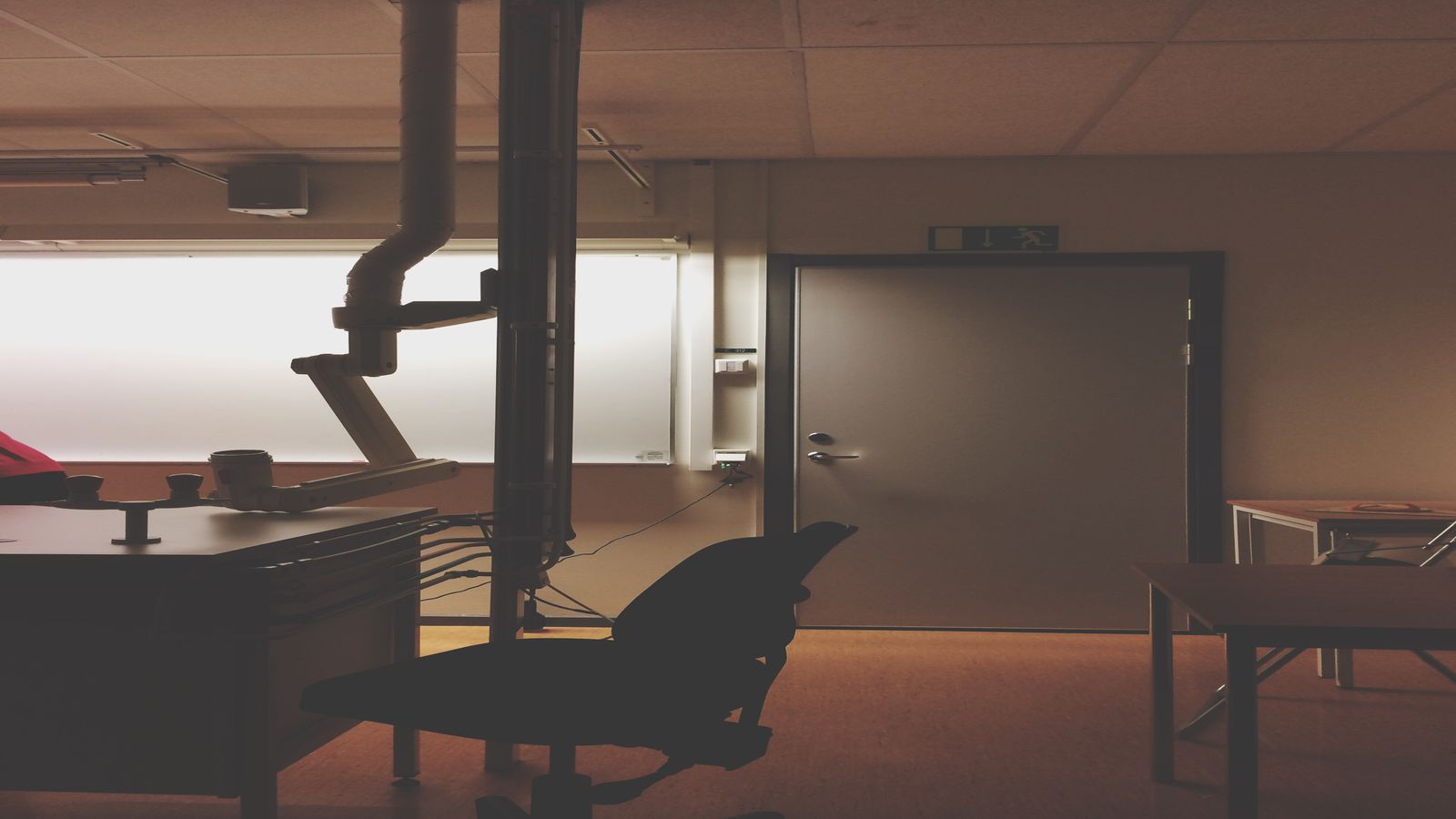
Programming requires sustained concentration in a way that most knowledge work does not. The mental model a developer holds in their head while working on a complex feature — the data flow, edge cases, state transitions, dependencies — is fragile. A single interruption can collapse it, and rebuilding that model takes 15 to 25 minutes. That number comes from research by Gloria Mark at the University of California, Irvine, and it has been replicated enough times that it’s hard to argue with.
This piece covers why private offices matter for programmers specifically, what the research says about interruptions and deep work, and why the industry’s embrace of open-plan offices has been one of its most expensive mistakes.
The Cost of an Interruption
When a developer is deep in a problem — tracing a data race through three services, or reasoning about how a schema migration will affect downstream consumers — they are holding a complex mental model in working memory. This is not metaphorical. Cognitive psychology research shows that working memory has hard limits: roughly four chunks of information at a time for most people. Programming requires stacking abstractions, and those stacks collapse on interruption.
A study by Chris Parnin and Spencer Rugaber at Georgia Tech found that developers needed an average of 10–15 minutes to resume a task after an interruption, and that only 10% of interrupted work sessions were resumed within a minute. The rest required significant ramp-up time. Some tasks were never resumed at all — the developer moved on to whatever the interruption was about and the original work sat unfinished.
Consider what this means at scale. In an open office where a developer is interrupted four or five times in a morning, the total productive deep-work time might be under an hour out of a four-hour block. The company pays for four hours. It gets one.
What Open Offices Actually Do
The open office trend was sold on two promises: increased collaboration and reduced real estate costs. The collaboration claim has been directly contradicted by research. A 2018 study published in the Philosophical Transactions of the Royal Society (Bernstein and Turban) tracked workers before and after a transition to open-plan offices. Face-to-face interactions dropped by 70%. Email and messaging volume increased to compensate. People put on headphones and tried to create virtual walls since the physical ones were gone.
The real estate savings are real. Open offices cost less per employee in floor space. But the productivity loss dwarfs the savings. If a developer earning $120,000 per year loses 30% of their productive time to interruptions and environmental noise, that is $36,000 per year in wasted capacity — per developer. The private office costs a fraction of that.
Flow State Is Not Optional
Mihaly Csikszentmihalyi’s concept of flow — a state of complete absorption in a task — is not a nice-to-have for programmers. It is the state in which complex problems get solved. According to Wikipedia’s article on flow, flow requires uninterrupted concentration, clear goals, and immediate feedback. Programming provides the goals and feedback naturally. The office environment determines whether the concentration part is possible.
Getting into flow typically takes 15–20 minutes of uninterrupted focus. In a private office with a closed door, achieving this is straightforward. In an open office, it depends on whether the people around you happen to be quiet, whether someone decides to take a phone call at their desk, and whether the facilities team has scheduled another fire drill.
The Door Is the Feature
The critical piece of a private office is not the walls — it’s the door. The door is a signal. When it is closed, it means: I am working on something that requires concentration. Do not interrupt me unless it is genuinely urgent. This signal does not exist in an open office. There is no polite way to tell the person next to you to stop talking.
Headphones have become the proxy for a closed door, but they are a poor substitute. They block sound at the cost of comfort (try wearing noise-cancelling headphones for eight hours). They do not block visual interruptions — someone walking up to your desk, waving, tapping your shoulder. And they create an adversarial dynamic: the headphone wearer is seen as antisocial rather than as someone doing their job.
What Joel Spolsky Got Right
Joel Spolsky wrote about this in 2000 in his “Bionic Office” design at Fog Creek Software. Every developer got a private office with a door, a window, and enough space to think. He argued that the cost was trivial compared to the developer’s salary and that the productivity gains were measurable. He was right.
The objection most companies raise is cost. But the math does not support the objection. A private office for a developer might cost $3,000–$8,000 more per year than an open-plan desk, depending on the market. If that office preserves even 10% of the developer’s productive time, it pays for itself several times over.
What Actually Works
The practical recommendation:
- Private offices for developers who spend their day writing or debugging code. Door closed = do not disturb.
- Shared collaboration spaces for meetings, pairing sessions, and design reviews. These happen at scheduled times, not spontaneously in someone’s face.
- Quiet hours: if private offices are not possible, establish daily blocks (mornings, typically) where interruptions are not allowed. No meetings before noon is a common and effective policy.
- Async communication default: move discussions to written channels. A Slack message can wait. A tap on the shoulder cannot.
None of this is new information. DeMarco and Lister published Peopleware in 1987, making the same arguments with extensive data. Nearly four decades later, the industry is still making the same mistake — optimizing for the appearance of collaboration instead of the reality of focused work.
The Bottom Line
A programmer in a private office with a closed door, working without interruptions for a four-hour block, will accomplish more than the same programmer in an open office over an entire day. The research supports this. The experience of every developer who has worked in both environments supports this. The only thing standing in the way is the belief that floor space is more expensive than wasted engineering time. It is not.